Common Types of Warehouse Racking Damage
Identifying Damage to Pallet Racking and Cantilever Racking
Warehouse racking is regularly exposed to operational activity, including forklift truck movements, pallet handling, loading and unloading. Over time, this can result in damage to structural components and other parts of a storage installation.
Even seemingly minor damage can affect the condition and safe operation of a racking system. Identifying, recording and addressing damage is an important part of effective warehouse racking safety management.
At A-Z Rack Inspections Ltd, our SEMA Approved Racking Inspectors (SARIs) carry out professional inspections of pallet racking and cantilever racking installations throughout the UK.
This guide explains some of the common types of racking damage, what to look out for and why regular inspections are important.
Pallet Racking Damage
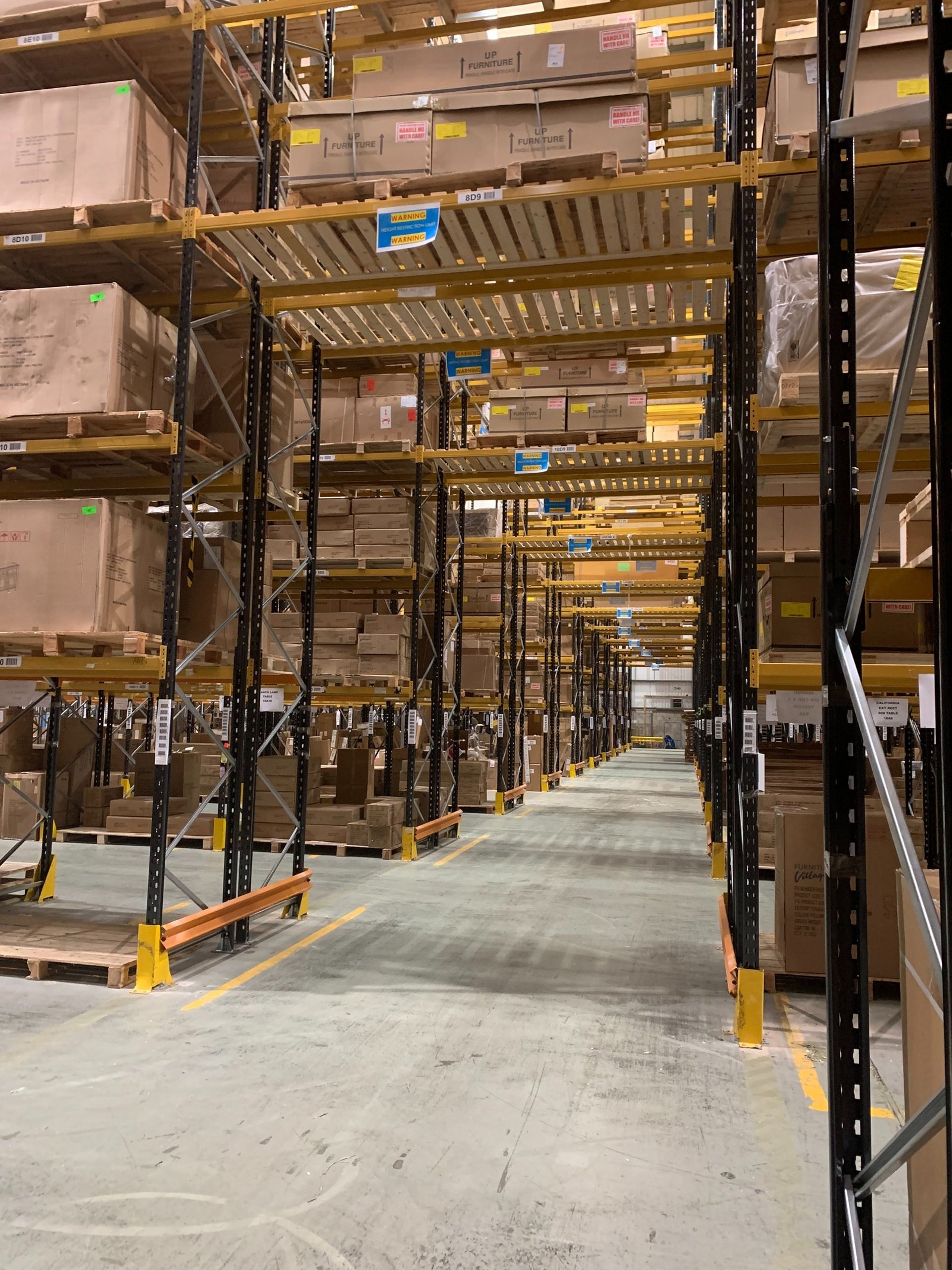
Pallet racking is commonly used in warehouses and distribution centres, where forklift trucks and other materials-handling equipment operate around the storage installation. Impact damage, overloading, missing components and deterioration can all affect the condition of the system.
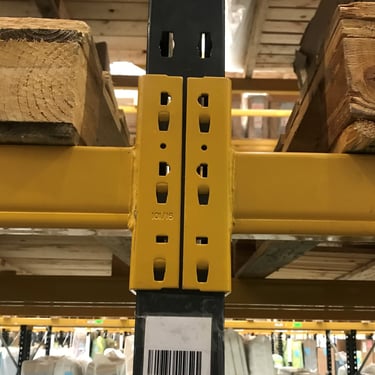
1. Damaged Uprights and Frame Columns
Uprights are the vertical structural members of pallet racking frames and are essential to the stability of the installation.
Damage can occur when forklift trucks or other handling equipment collide with the frame, particularly at lower levels.
Common examples include:
Bent or distorted upright columns
Impact damage to the front or side of the upright
Twisting or buckling of the column profile
Damage to the upright footplate or baseplate
Damage around connection points and frame bracing
Upright damage should be assessed by a technically competent person against the applicable inspection criteria. Significant damage may require the affected area to be taken out of use and unloaded.
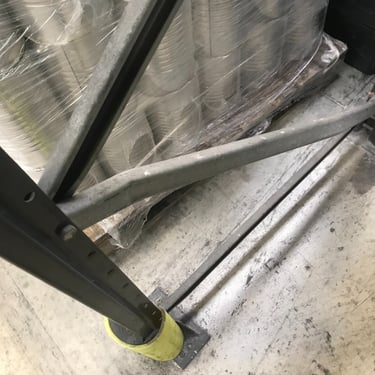
2. Damaged Horizontal and Diagonal Bracing
Frame bracing connects the upright columns and contributes to the overall strength and stability of the racking frame.
Bracing can be damaged by forklift impacts, handling equipment or other operational activity.
Examples include:
Bent or distorted horizontal bracing
Damaged diagonal bracing
Cracked or damaged welds
Loose or missing bracing connections
Distorted frame components
Damaged or missing bracing can affect the structural integrity of the frame and should be assessed as part of a professional racking inspection.
3. Damaged Pallet Racking Beams
Beams support the stored pallets and transfer the imposed loads into the upright frames.
Damage may occur through forklift impacts, incorrect pallet positioning or excessive loading.
Common examples include:
Bent or visibly deflected beams
Twisted beam sections
Damage to beam end connectors
Cracked or damaged welds
Missing or damaged beam safety locks
Beam damage and missing safety components should be investigated. Damaged beams should not be straightened, welded or modified without appropriate manufacturer approval and technical assessment.
4. Damaged Beam End Connectors
Beam end connectors secure the horizontal beams to the upright frames.
Damage to these connections can affect the integrity of the beam-to-frame connection.
Inspectors look for:
Bent or distorted end connectors
Cracked or damaged welds
Loose or damaged connections
Missing or incorrect locking devices
Signs of beam disengagement
Any concern involving the beam connection should be assessed promptly.
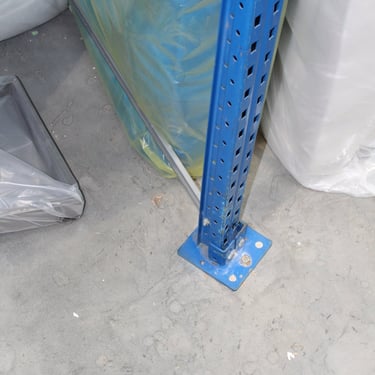
5. Damaged Baseplates and Floor Fixings
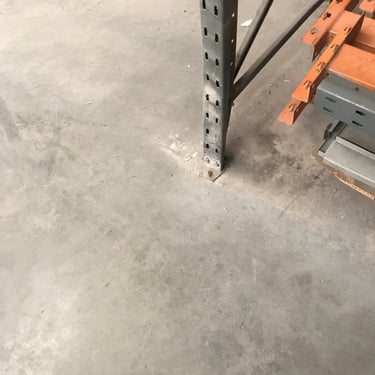
Baseplates and floor fixings help secure the racking frames to the floor.
Damage or deterioration in this area can affect the stability and anchorage of the installation.
Examples include:
Bent or damaged baseplates
Missing or loose floor fixings
Damaged or displaced anchors
Cracked or damaged concrete around fixings
Incorrect or unsuitable fixing arrangements
Baseplate and anchorage conditions should be checked during inspections, with any concerns assessed in relation to the installation design and floor conditions.
6. Damaged Rack Protection
Rack protection helps reduce the likelihood of impact damage to vulnerable racking components.
This may include upright protectors, frame protection and rack-end barriers.
Common issues include:
Cracked or split upright protectors
Bent or displaced protection
Missing rack-end protection
Loose or damaged fixings
Protection that no longer provides effective coverage
Protection should be maintained in suitable condition and replaced where it is no longer fit for purpose.
7. Incorrect Loading and Pallet Positioning
Not all racking concerns involve visible structural damage. Incorrect loading and poor pallet positioning can also create risks.
Examples include:
Pallets exceeding the specified load capacity
Incorrect pallet dimensions or unsuitable pallet condition
Pallets not positioned correctly on the beams
Unevenly distributed loads
Goods overhanging into aisles or neighbouring storage positions
Missing or incorrect load notices
Racking should always be loaded in accordance with the specified configuration and applicable load information.


Cantilever Racking Damage
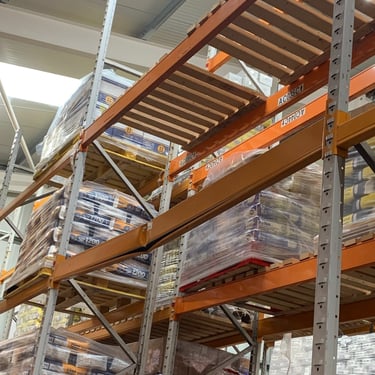
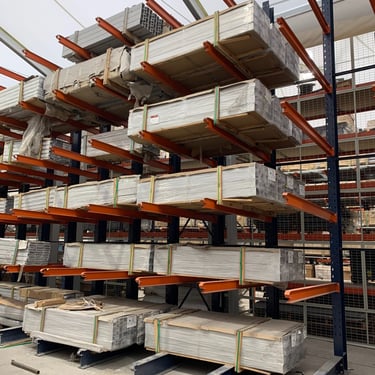
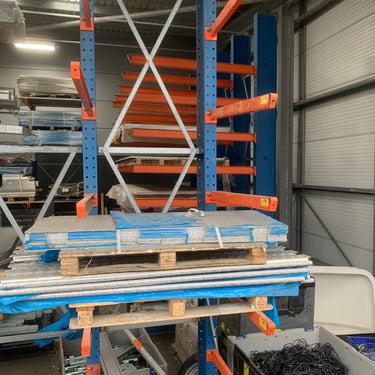
Cantilever racking is designed to store long, bulky and irregularly shaped materials, including timber, steel sections, pipes and other long products.
Unlike conventional pallet racking, cantilever systems use projecting arms supported by vertical columns and braced structural assemblies. Damage to any of these components can affect the safe operation of the installation.
1. Damaged Cantilever Arms
Cantilever arms support the stored materials and are particularly exposed to impact and loading damage.
Common examples include:
Bent or distorted arms
Twisted arms
Cracked or damaged welds
Damaged arm connections
Missing or damaged arm retaining components, where fitted
Damaged arms should be assessed against the manufacturer's specifications and the applicable inspection criteria.
2. Damaged Cantilever Columns
The vertical columns form the main structural support for cantilever racking.
Damage may occur through impact from forklift trucks, handling equipment or stored materials.
Inspectors look for:
Bent or distorted columns
Twisting or buckling
Localised impact damage
Damaged arm connection points
Damage to column baseplates
Column damage can have implications for the stability and load-bearing capacity of the installation.
3. Damaged Cantilever Bracing
Bracing connects and supports the cantilever structure, helping maintain its stability.
Potential defects include:
Bent or distorted bracing members
Missing or loose connections
Damaged bolts or fixings
Cracked or damaged welds
Signs of movement or structural distortion
Bracing defects should be investigated and assessed by a technically competent person.
4. Damaged Baseplates and Floor Fixings
Cantilever racking relies on suitable baseplates and floor anchorage to support the installation and resist the forces imposed during use.
Examples of damage include:
Bent or distorted baseplates
Loose or missing floor fixings
Damaged anchor bolts
Cracked concrete around the base
Signs of movement at the base of the columns
Any concerns with the base or anchorage should be assessed against the installation design and manufacturer's requirements.
5. Overloading and Incorrect Storage
Cantilever racking is designed for specific loading arrangements and capacities.
Incorrect loading can place excessive forces on the arms, columns and supporting structure.
Examples include:
Exceeding the specified arm load capacity
Uneven distribution of materials
Incorrect positioning of stored products
Materials extending beyond the intended storage area
Loading arrangements that differ from the approved design
Missing or incorrect load notices
The installation should only be loaded within its specified design capacity and configuration.


Red Risk – Immediate Action
Serious damage or a potentially dangerous condition requiring immediate escalation and appropriate controls, which may include unloading and isolating the affected area.
How Is Racking Damage Classified?
During a professional racking inspection, identified damage is assessed in accordance with applicable SEMA guidance and the relevant inspection criteria.
Where applicable, findings are categorised using the SEMA Red, Amber and Green risk classification system.
Amber Risk – Remedial Action Required
Damage requiring corrective action within the applicable timescale specified in the inspection recommendations.
Green Risk – Within Applicable Limits
Damage within the relevant SEMA limits for that category. Findings should still be recorded and monitored as part of ongoing racking safety management.
The classification of damage depends on the component, the type and extent of damage, and the applicable assessment criteria. It should not be determined by appearance alone.
What Should You Do If You Discover Racking Damage?
If damage is identified by warehouse staff, forklift operators or during routine internal checks, it should be reported promptly in accordance with the site's racking safety procedures.
Recommended steps include:
Report the damage to the responsible person or warehouse manager.
Identify and record the affected racking location.
Prevent further use of the affected area where there is a concern about safety.
Arrange an assessment by a technically competent person.
Complete any necessary remedial work using suitable replacement components and approved repair methods.
Record completed remedial work and update the site's inspection records.
Damaged racking should never be repaired by unauthorised straightening, welding or modification.
Professional Pallet and Cantilever Racking Inspections
Regular inspections help identify damage before it develops into a more serious concern.
A-Z Rack Inspections Ltd provides professional inspection services for businesses throughout the UK, carried out by SEMA Approved Racking Inspectors.
Our inspections include an assessment of accessible structural components, visible damage, loading arrangements, protection and other relevant aspects of the installation.
Following the inspection, we provide a detailed written report identifying findings, their applicable risk classifications and recommendations for remedial action.
For further information, visit our dedicated service pages:
Pallet Racking Inspections – Professional inspections of adjustable pallet racking and other pallet storage installations.
Cantilever Racking Inspections – Specialist inspections of cantilever racking systems used for long and bulky materials.
Racking Inspections Across the UK
A-Z Rack Inspections Ltd based in North Wales provides nationwide pallet racking inspection services.
Our coverage includes:
North Wales: Mold, Flintshire, Wrexham, Deeside and Bangor.
North West England: Chester, Liverpool, Warrington and Manchester.
Midlands: Birmingham, Derby, Stoke-on-Trent and surrounding areas.
South Wales: Cardiff and surrounding industrial areas.
We also travel to other locations across the UK.


Arrange a Racking Inspection
Whether you have identified damaged pallet racking, bent cantilever arms, damaged uprights or other concerns within your warehouse, A-Z Rack Inspections Ltd can help assess the condition of your storage installation.
Contact our team to discuss your requirements and arrange a free, no-obligation quotation.
Chris: 07947 886161
Peter: 07917 664940
Email: sales@a-zrackinspections.co.uk
A-Z Rack Inspections Ltd
Keepers Cottage, Groes Farm,
Rhosesmor Road, Northop,
Mold, Flintshire, CH7 6AG
Professional racking inspections across the UK.
Keepers Cottage, Groes Farm, Rhosesmor Road, Northop, Mold, Flintshire, CH7 6AG
Email: sales@a-zrackinspections.co.uk
Tel: 07917 66 4940
Tel: 07947 88 6161
Copyright © 2026 A-Z Rack Inspections Ltd
Registered Company number: 13065668
VAT Registered: GB 367 4452 73
Contact Details:
A-Z Rack Inspections, your racking experts with over 25-years of industry experience to ensure your business is safe, compliant.

